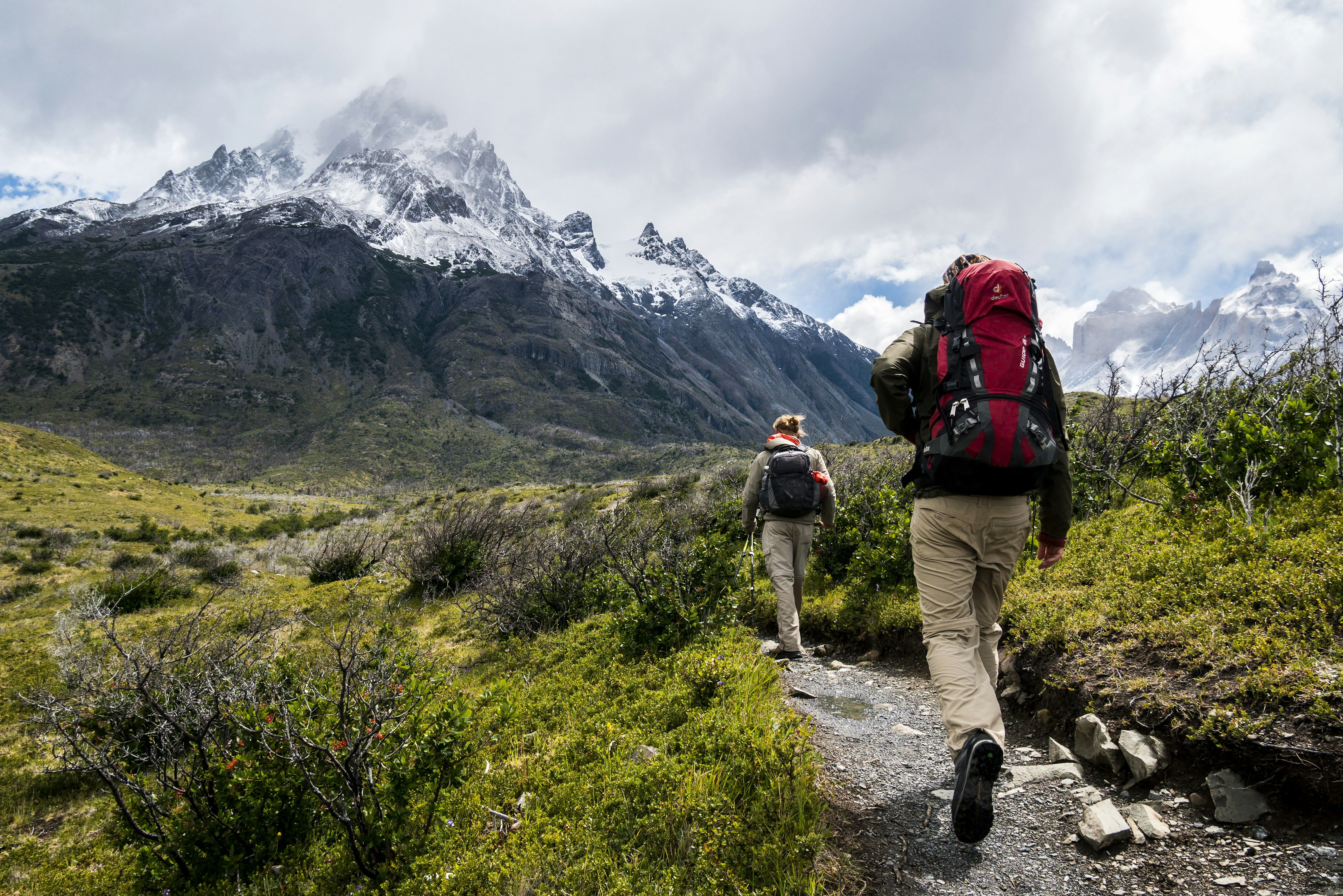
Hiking in the UAE is an excellent way to discover rugged mountains, winding wadis, old settlements and landscapes that are completely different from the country's modern cities. For beginners, however, preparation is more important than distance or speed.
The Hajar Mountains are beautiful but demanding. Many routes cross exposed slopes, loose stones, large boulders and steep escarpments. Shade and natural drinking water may be unavailable for the entire hike.
This should not discourage you. Beginners can enjoy hiking safely by selecting an appropriate route, travelling with experienced companions and treating the weather and terrain seriously.
Important safety notice
This guide provides general information and does not replace route-specific advice, professional instruction or emergency training. Beginners should not attempt remote, unmarked, technical or exposed mountain routes without competent and experienced guidance.
Start with an easy and well-understood route
Your first hike should not be selected only because its photographs look impressive. A route can appear short on a map while involving difficult scrambling, loose rock, steep climbs or complicated navigation.
Before choosing a trail, find out:
- The total distance and expected duration
- The amount of elevation gain and loss
- The condition and difficulty of the terrain
- Whether scrambling or exposure is involved
- Whether the trail is marked or unmarked
- Whether phone reception is reliable
- The location of safe exit or turnaround points
- Whether recent rain has affected the route
Choose a route comfortably below your maximum ability. Allow extra time for photographs, navigation, rest stops and slower movement over loose rocks.
A useful beginner rule
Finish your first hike feeling that you could have continued, rather than reaching the end completely exhausted.
Choose the cooler months for hiking
The cooler part of the year is generally the most suitable period for hiking in the UAE. Even in winter, exposed slopes can become surprisingly warm under direct sunlight.
Mountain plateaus, open wadis and rocky plains may offer little shade. Sun-heated rocks can make the environment feel considerably hotter, particularly during the middle of the day.
Beginners should avoid treating the presence of a breeze or cooler mountain air as proof that the conditions are safe. Heat exposure depends on the sun, humidity, exertion, clothing, hydration and the amount of reflected heat from the surrounding terrain.
Plan the timing carefully
Begin early enough to complete the exposed sections before the warmest part of the day. Set a firm turnaround time and include the return journey in your calculation.
A turnaround time means you stop progressing and return even if you have not reached the planned viewpoint or summit. It protects the group from descending after dark or continuing in worsening heat.
Heat and dehydration can develop quickly
Water sources are unreliable or completely absent on many UAE mountain routes. Do not expect to refill a bottle from a natural pool, stream, farm or settlement.
Dehydration can develop rapidly during physical activity, especially when the route is exposed and the hiker is not yet accustomed to mountain conditions.
Carry enough water for the entire route, plus an additional reserve for delays, navigation mistakes or assisting another member of the group. The amount required varies according to temperature, humidity, distance, elevation, fitness and individual health.
Warning signs of heat illness
- Headache or dizziness
- Unusual weakness or exhaustion
- Nausea or vomiting
- Muscle cramps
- Loss of coordination
- Confusion or unusual behaviour
- Collapse or reduced consciousness
Confusion or collapse is an emergency
Stop the activity, move the affected person away from direct heat, begin safe cooling measures and contact emergency services. Do not force an unconscious or confused person to drink.
Do not ration water early so that you can continue deeper into a route. If the group's supply is becoming insufficient, turn back while there is still a safe margin.

Do not get lost
Trails exist throughout the Hajar Mountains, but many are not formally marked. Some paths were created by residents, shepherds, farmers or previous hikers and may divide into several directions.
A path that appears obvious while climbing can be surprisingly difficult to identify during the return journey. Shadows, changing light and similar-looking valleys can make familiar terrain look different.
Prepare the route before leaving
- Download the complete route for offline use.
- Carry a fully charged phone and power bank.
- Use a dedicated navigation application you understand.
- Study major junctions, ridges and turnaround points.
- Keep a second navigation device within the group.
- Record the location of the vehicle or starting point.
- Tell someone outside the group where you are going.
Do not blindly follow a downloaded GPS track. Tracks can contain errors, detours or sections created under different conditions. Compare the route with the actual terrain and turn back if it becomes unsuitable.
Navigation technology can fail
Batteries can run out, screens can break and satellite accuracy can be reduced beside cliffs or inside narrow gorges. Carry redundancy and learn basic navigation rather than depending on one phone.
Understand the character of the Hajar Mountains
Hiking as a recreational activity is still developing across many parts of the Hajar Mountains. Unlike heavily managed hiking regions elsewhere, some UAE routes may have no signposts, maintained paths, protective railings or official rest points.
The terrain is harsh and frequently uneven. Large boulders, steep escarpments, sharp limestone, loose gravel and exposed drops help create the mountains' dramatic appearance, but they also increase the risk of falls and injuries.
Move carefully over loose rock
Test uncertain rocks before putting your full weight on them. Keep sufficient distance between hikers on steep sections so that a dislodged stone does not strike the person below.
When a rock falls, warn everyone immediately with a clear and loud call. Do not stand directly beneath another hiker on a loose slope.
Do not underestimate descents
Descending can place more stress on the knees and requires careful balance on loose surfaces. A route that feels comfortable while climbing may feel considerably more difficult on the way down.
Trekking poles can improve balance on suitable terrain, but they do not replace correct footwear, route judgement or careful movement.
Turn back before the route becomes technical
Hiking can gradually turn into scrambling or climbing without an obvious boundary. If the route requires unfamiliar exposure, rope work or difficult climbing movements, do not continue without the necessary training and equipment.
Never underestimate flash floods
Flash floods are among the most serious hazards in wadis, narrow gorges and drainage channels. Water can arrive suddenly and with tremendous force, carrying rocks, mud, branches and debris.
Rain does not need to be falling directly above your location. A storm elsewhere in the catchment area can send water through a dry channel some distance away.
The chance of rain may be greater during the cooler months, but unstable weather and flooding can occur at other times of the year. Always check current forecasts and official warnings.
Do not enter a wadi when rain is forecast
Avoid narrow wadis, slot-like gorges, drainage channels and low crossings whenever rain, thunderstorms or flood warnings affect the surrounding mountains. Never enter or cross moving floodwater.
Possible warning signs
- Dark clouds forming over nearby or distant mountains
- Thunder, even when the sky above you appears clear
- A sudden increase in water level
- Water becoming muddy or carrying debris
- A distant roaring or rumbling sound
- Official rain, storm or flood warnings
Leave low ground early. Do not wait inside a gorge to confirm whether a flood is approaching, and do not remain close to the edge merely to watch or record it.
Travel with a group of experienced hikers
Beginners should avoid remote mountain hiking alone. Join a responsible group led by people who genuinely know the route and understand first aid, navigation, weather and emergency planning.
A large social-media following does not prove that a hike leader is competent. Ask about the route plan, difficulty, pace, group size, equipment requirements and emergency arrangements before joining.
Stay together
The group should move at a pace that allows everyone to remain together. Avoid allowing fast hikers to disappear far ahead or leaving slower participants behind.
Stop at route junctions until all members have arrived. Perform regular headcounts and make sure everyone knows who is leading and who is remaining at the back.
Communicate honestly
Tell the group early if you feel unwell, exhausted, frightened or unable to continue. Hiding a problem until it becomes severe puts both you and the rest of the group at greater risk.
Do a little homework
Read about the route, study photographs, check the expected weather and understand the equipment list before meeting the group. Preparation is a shared responsibility.
Essential equipment for a beginner hike
The exact equipment depends on the route, season and expected conditions. The following list is a sensible starting point for a straightforward day hike.
- Supportive footwear with good grip
- Comfortable backpack
- Enough drinking water
- Emergency water reserve
- Food and energy snacks
- Sun hat and sunglasses
- Suitable sunscreen
- Lightweight long-sleeved clothing
- Offline route and navigation app
- Charged phone and power bank
- Basic first-aid kit
- Headlamp with spare power
- Whistle
- Identification and emergency details
- Light insulating or windproof layer
- Small rubbish bag
Do not wear a new pair of shoes for the first time on a long hike. Test footwear and your loaded backpack on shorter walks first.
Wildlife and mobile coverage
Serious wildlife encounters are uncommon on most popular UAE hiking routes, but the mountains are not free of animals. Snakes, scorpions, insects, goats and other wildlife may be present.
Do not place your hands into holes or beneath rocks without looking. Shake out footwear and clothing before use when camping, and avoid touching or attempting to move wildlife.
Mobile-network coverage may be available across many mountain areas, particularly near roads and developed destinations, but it can weaken or disappear inside remote valleys, behind ridges and in narrow gorges.
Never make phone coverage your only emergency plan. Download the route in advance, share your itinerary with someone outside the group and carry backup power.
Emergency assistance in the UAE
For a serious medical emergency, contact 998 for ambulance assistance.
For police assistance, call 999.
Give the clearest possible location, including the emirate, mountain or wadi name, GPS coordinates and details of the casualty. Keep one person available to communicate with the emergency operator.
Beginner hiking checklist
Choose a beginner-appropriate route
Confirm the distance, elevation, terrain, navigation difficulty and expected duration.
Check the weather and official warnings
Avoid mountain and wadi routes during rain, thunderstorms, flood warnings or extreme heat.
Start early
Allow enough time for a slower-than-expected pace and return well before darkness.
Carry enough water
Include an emergency reserve and never rely on finding water along the route.
Download the route
Save it for offline use and make sure more than one person has navigation capability.
Hike with experienced companions
Beginners should avoid remote, unmarked and difficult trails without competent guidance.
Tell someone your plan
Share the route, participant names, vehicle details and expected return time.
Wear suitable equipment
Use supportive footwear, sun protection and clothing suitable for exposed rocky terrain.
Set a turnaround time
Turn back when the agreed time arrives, even if the group has not reached the intended destination.
Be willing to cancel
Heat, rain, tiredness, navigation concerns or missing equipment are valid reasons to postpone a hike.
The Hajar Mountains can be enjoyed safely
There is no need for a beginner to feel frightened by the Hajar Mountains. Many people hike in the region safely and enjoyably throughout the cooler season.
Safety comes from preparation rather than confidence alone. Choose an appropriate route, respect the terrain, carry the necessary equipment and travel with people who understand the mountains.
Do not assume that a short route is automatically easy, that a dry wadi cannot flood or that a mobile phone will always work. Small precautions taken before the hike can prevent serious problems later.
Begin with easier trails, learn from experienced hikers and allow your judgement to develop alongside your fitness.
Final thoughts
Hiking in the UAE offers rocky ridges, spectacular wadis and unforgettable mountain views. For beginners, the best approach is to progress gradually rather than attempting a famous or difficult route immediately.
Choose the cooler months, prepare for heat and dehydration, study the route, monitor the weather and never underestimate flash floods. Stay with your group and speak up whenever you feel unsafe or uncertain.
A hike does not need to reach a summit to be successful. Returning safely with greater knowledge and confidence is the achievement that matters most.
Sources and useful resources

DubaiHiking.org Editorial Team
Our team publishes practical trail guides, outdoor-safety information and hiking stories for explorers across Dubai and the UAE.